QSO TODAY AMATEUR RADIO PODCAST
  • Podcasts
    • QSO Today Podcast Archive >
      • Download Podcast List as PDF
      • Sortable Podcast List
      • Downloadable Episodes CSV File
      • Complete List of Podcasts - Libsyn
      • iTunes List of QSO Today Episodes
  • Blog
    • Eric's News Links
    • Eric's Favorite Podcasts
  • Expo Videos
  • Donate
  • Subscribe
  • About
    • Contact >
      • Apple Reviews
    • Talk Groups
    • Whitelist
    • Ham Radio Calendar
    • Ham Radio Event Google Calendar
  • Login

My Gap year

8/30/2020

0 Comments

 
I am trying to make sense of this year, this pandemic year.  It did create for me an opportunity to see that it was possible to pull off a great ham radio event, virtually.  The lessons for me and the people that helped me were huge.  One of the things that I learned is that there are a large number of hams that will not go to live events, even if there was not a virus, due to their location, their means,  their age, or their health.  The Expo was an opportunity to increase their ham radio knowledge, reach out to exhibitors, and potentially make new friends.  

I titled this message, "The Gap Year" because traditionally, the gap year is that year between high school and college, where if you could, you traveled abroad, took a Eurail Pass to travel in Europe, or took a year of study.  You were out of your element, in a different place and time, away from your friends and family.  You were there to experience something new and different.  It was, for many young people, transformational. 

This pandemic year feels like the gap year to me.  My friends and family are at the end of Zoom or Skype. My relationships outside of my marriage are literally at two arms length, out of reach, for now.  My only public mixing is swimming laps in a pool 3 times a week.  I am told that the chlorine kills the virus.  Perfectly safe.  Locker room - not safe.  Wear my mask from the car to the pool.  Use my Corona Virus App to file the daily statement that I don't have symptoms or a fever to be allowed into the pool.  Straight forward, but strange. 

Most of the things that I like to do include people, often lots of people.  The physical presence of people, lots of people, is potentially dangerous.  By calling this a gap year, I have hope that it will end, and we will all be back in our element,  including live ham radio events.  I will be there, if possible, when this gap year is over, in addition to hosting another virtual Expo on March 2021. 

73 - Eric, 4Z1UG
0 Comments

Still Recovering

8/24/2020

0 Comments

 
​I realize that it has been a few weeks since I have sent out a message when posting a new podcast.  I am still recovering from the Expo.  The post Expo work is large but different.  We are all pouring over 3000 plus surveys to understand what we need to improve for next March.  

The majority of the Speakers for the QSO Today Virtual Ham Expo were former guests of the QSO Today Podcast. Only ten were not. So I am interviewing the remaining ten, so that you will have their ham radio story too. You will find these interviews easily by putting in the their call sign on the search bar at the top of the QSO Today Homepage.

The QSO Today Virtual Ham Expo is still open in on-demand mode. This means that all of the great content and speakers are there on the platform, only the chat system is not operational. Until September 9th.   
We are putting the Q&A sessions up on the platform now after cutting and editing over 180 GB of video. Sadly, some of the Q&A sessions did not get recorded. We are working on a better solution for next March.

I have had one of the "gamers" of the Leaderboard reveal to me how gaming was done and why all of the top scorers are tied. They in fact have milked every point out of the system to the very last one. Some of these guys are very sophisticated. Of course, the game will be very different in March.

Mark Smith, KR6ZY, "Smitty Halibut" as he is also called, is a relatively new ham that has taken up ham radio project building as one of his key areas of interest. I can relate to him as project building has been my interest over the years. Mark was a speaker at the Expo and is a regular contributor to the Ham Radio Workbench Podcast hosted by George, KJ6VU and Jeremy, KF7IJZ.

Finally, QRP Labs, is ending their sponsorship of the QSO Today Podcast. Hans, G0UPL, is a great friend and supporter of QSO Today. I want to thank him and remind you that all of the links to QRP Labs from earlier episodes still work and support us both. He has some great new projects over there and I for one always look to see what's new at QRP Labs. 


73, Eric 4Z1UG
0 Comments

Riley Hollingsworth K4ZDH

8/18/2020

0 Comments

 
Last week, Al Brogdon, W1AB, was episode 310.  Al has contributed scores of articles to the ham radio magazines going back over 60 years.  It was a fun QSO for me.  Be sure not to miss it.   

I somehow seem overwhelmed by the QSO Today Virtual Ham Expo preparations.  However, I have an amazing staff helping me with all of the details from exhibitor booths to on-boarding all of the speaker presentations to our expo platform.  It is a huge job and it is getting done, piece by piece.  So I can't wait for you to see it when it opens at 0100 hours Zulu on August 8th with Dr. Scott Wright, K0MD's Keynote Address.  Scott is a big supporter of the QSO Today Podcast.  I wanted Scott's keynote address to stand by itself, so it is going out Friday Evening, August 7th USA time.  

The Exhibition Hall will be open at the same time for the next 48 hours.  Most of the exhibitors will be in their booths beginning at 1500 Zulu on August 8th, or Saturday morning USA time.  

Our speakers are busy this weekend uploading their presentations to us for some minor editing and on-boarding to the convention auditorium.  They have been great and I am looking forward, like you, to view their presentations.  

In the middle of all of this, I had the opportunity to have a QSO with Riley Hollingsworth, K4ZDH.  Riley is a well known amateur radio speaker and spent his career working at the FCC.  Riley worked there as the wireless industry started to boom and evolve the services like paging, cellular, PCS, and the modern services that we have today.  He shares his ham radio story and what impact he had on the FCC during his tenure there. 

The COVID-19 is spiking in Israel this Summer.  The Summer heat has not made it go away, so stay safe out there. 

73, Eric 4Z1UG
0 Comments

Sidewalk EME

6/27/2020

0 Comments

 
​School is over for Karen, my teacher and XYL. She is nursing a broken arm from a fall in the house. We have floor tiles that settle that are easy to trip over if you don't watch it. We both didn't notice it until it was too late. So she is on the mend and we are still social distancing as the summer moves forward. The beautiful Summer weather and our exhaustion with social distancing is causing the virus to spike here as our population attempts to get back to normal. A reminder that we are not out of the woods yet and have to continue to be careful.

The QSO Today Virtual Ham Expo is also moving at a rapid pace. The ARRL has partnered with us to make us an "ARRL Sanctioned Hamfest" that will result in lots of publicity. Our staff is up to five people including me to get this show opened on August 8th at 0100 Zulu, with Dr. Scott Wright, K0MD's keynote speech. I can't wait. We are still selling booths knowing the many of our favorite ham radio vendors will sit this one out waiting to see how successful we will be. Our Sponsors are great and are working to promote this event and getting their exhibit hall booths set up. I said to one that we will be a success just from the over 70 speakers that will present on the two days of the event and the existing exhibitors who did not hesitate to support this effort. I respectfully ask you to sign up for your free ticket as registration numbers are an important confidence builder to sponsors and speakers.

Here is where I need some help on August 8th and 9th.

I am arranging "talk in channels" during the Expo using Echo-link, D-Star, System Fusion, Allstar, IRLP, DMR, and P25. I think that I have the DMR, D-Star, System Fusion and Allstar covered. I would like to have Echolink, IRLP, and P25 "talk groups" available. Any ideas?

I will also need net control operators on those talk groups to answer questions from a FAQ that I will prepare to help people around the virtual conference hall. If you would like to volunteer, please click on this link: https://bit.ly/3ibEQfx to sign up.

If you have other ideas on how to create an on-the-air presence, please reply to this message. I am open to suggestions.

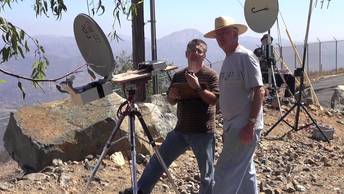
The name of this post is called "sidewalk EME" because that is exactly what my guest this week, Doug Millar, K6JEY, does to work DX by bouncing signals off the moon. You see, Doug does not have a lot of yard to do EME on 10 GHz. So he assembles his 8 foot satellite dish and 10 GHz rig on the sidewalk in front of his condo in Southern California. He demonstrates that a determined amateur radio operator can make a contact from just about anyplace. I hope that you enjoyed this QSO Today as much as I did making it.

Thanks for listening. Stay safe and be careful out there. 

73, Eric 4Z1UG
0 Comments

Zero to 60 in Four Seconds

5/31/2020

0 Comments

 
We are about 8 weeks away from the first QSO Today Virtual Ham Expo, and have started in earnest to sell exhibitor booths to pay for this event. As I write this, FlexRadio and RT Systems have signed to be the first Gold Sponsors after Icom's Platinum position. These companies will lead the way for the rest of the exhibitors so that we can create an amazing and memorable event for the ham radio community. Brad, Emanuela, and I  are making calls and demonstrations of the unique platform that we are using to make this event. Its fun and on the edge.

I told a well known ham and business person in the ham radio community as I was making a demonstration for his company, that my first vision of a pioneer is the American settler with his face down in the dust of the Great Plains with a few arrows in his back. Its hard to be first and you hope that the arrows are not deep enough to hurt.

When I need a ham radio logo or QSL Card, my first choice is always Jeff Murray, K1NSS. Jeff was kind enough to do a spectacular job on the "Expo" logo with our name inside of a magnetic loop antenna.  Its a beautiful representation (above) of what I wanted to express and besides it will look good on coffee cups and hats.  

I had a great conversation with Tim Carter, W3ATB, who is my guest this week.  Tim is a relatively new ham, but an old hand in being a media personality.  Tim was the first full time remodeling guy with a radio talk show, years ago.  Since then he has created a great media business around his building interests.  When he became a ham, his first act was to find a mentor to get him to success fast.  That is why I called this message from Zero to 60 in four seconds.  Tim says in the show that a ham radio mentor is the fastest way to success and enjoyment of the hobby.  I can't agree more.  

Thanks for listening. Stay safe and be careful out there.

73, Eric 4Z1UG
0 Comments

Re-entering the World

5/9/2020

0 Comments

 
Beginning last week, the restrictions on our movement in Israel began to loosen up with the opening of malls, outdoor markets, and health clubs.  My wife's schools are saying that a limited number of kids can return to school, no more than 17 per class, and they don't have to wear masks inside the classroom with the teacher, only outside.  Huh? The XYL is not required to return until she is ready and comfortable with the situation.

Being older and perhaps in a higher risk group for the Covid-19 virus, our strategy is to add two weeks to whatever is going on outside.  If nobody is getting sick at school after two weeks, then we can exit our isolation and get on with our lives until the next crisis.  If on the other hand the opening is premature, then we hold for a while. Being unable to see the grandchildren has been the most difficult part of this isolation. Hopefully in a few weeks, that separation will also end.

In the meantime, me and my team are working on the QSO Today Virtual Ham Radio Expo. The dates are set for August 8 and 9th. We are using a virtual reality platform that will give us a full convention experience with exhibit hall, speaker auditoriums, and hospitality rooms. George, KJ6VU, from the Ham Radio Workbench podcast is helping me with the list of speakers, now close to 40 in 5 subject tracks. I’m excited.

I need a small favor. Please complete my survey by clicking on the button on the Expo page of the QSO Today website. This survey will give you a FREE ticket to both days of the event in August. Your registration will also show potential exhibitors that this project has your support. If you have already filled out this survey, then you have your free ticket.  I am truly grateful for this support. In a few weeks I will contact you with your registration.

I wish you a happy and healthy week and that you enjoy this episode 301 with Rick Dubbs, WW9JD. Rick learned to “social distance” while spending four years at sea in a US Navy nuclear submarine. He shares this and the rest of the story in this QSO Today.

73, Eric 4Z1UG
0 Comments

FCC Versus Amateur RAdio

2/23/2020

0 Comments

 
From all of these interviews, almost 300 now, I believe that amateur radio is one of the most exciting hobbies as well as a game changer and door opener for its participants.  

It is exciting because it is well beyond the few modes popular when i started in the 1970s such as SSB, FM, CW, and RTTY.  Now our tent is HUGE that includes computers, digital modes, the Internet for sharing, and SDR rigs.  It is an amazing time to be a ham.  

It is a game changer because of the skills that we acquire being hams that are  technical, competitive, social, research, project management, etc.  I can go on and on.  Very few hobbies offer so much.  

The doors this hobby opens are through the networks of individuals that we connect to through the hobby.  How many of my QSO Today guests found their life's work through their ham radio connections? 

Janis Carson, AB2RA, is also a ham whose doors were opened by her attachment to our hobby that began 60 years ago.  Her skills acquired more than compliment the amount of information and expertise that she shares on her website and in the pages of Electric Radio Magazine.  

She has become an activist and advocate for amateur radio to the FCC (hence my subject line), where our hobby is constantly under threat by the large mobile carriers who would like to gobble up our microwave frequencies.  Our low bands too are under threat as Janis explains in this QSO Today.  

Thanks for listening. 

73, Eric 4Z1UG
0 Comments

Farewell Windows 7

1/23/2020

0 Comments

 
I don't often speak or write about my other lives, outside of the podcast, but this week I felt compelled to speak about my most recent loss.  Windows 7 is now dead, buried, and a fading memory.  

For the last 30 years, every time I was at some transition point in my computer use, to buy a new one, or a change in the operating system, I reluctantly stayed with Microsoft.  I felt that with Windows 7, MS finally got it right.  On January 15, of this month, Microsoft decided to end its support of Windows 7, preferring that all users move up to Windows 10.  I have to run Windows 10 on a laptop to support my clients who still use it. 

For my own use and "my daily driver" , I finally made the decision that I put off for years - to move out of Microsoft Land to Kubuntu, or Ubuntu with KDE Plasma Linux.  My old Dell desktop now has a new 1TB SSD running Linux and it is fast and does not break, so far. Linux takes some getting used to, requires lots of Googling to understand how to add your favorite applications, and what new applications to use instead of Microsoft utilities, like Snipping Tool, that I use all day long.  

I am tweaking it along the way, but so far, so good.  I can do all of the tasks around the QSO Today podcast that I did on Windows, without restarts.  The suite of software that is available on Linux is remarkable. 

As I am a computer and network consultant by day, I have moved all of my clients off of Windows 7 to Windows 10 or Linux. I believe that an un-patched MS operating system is dangerous, and right now is a malware target. Consider upgrading to Windows 10, Apple OS, or Linux. 

My guest this week is Mike Foerster, W0IH, who has contributed many articles to QST and QEX Magazines over the years.  Mike points out that one of the problems with dipoles on 75-80 meters is that they are not broadband enough to cover the entire band.  Mike tunes his dipole in a very clever way that he discusses in the podcast and was the subject of one of his QST articles. 

Thanks for listening. 

73, Eric 4Z1UG
0 Comments

Every Ham Can Do Moon Bounce

11/23/2019

0 Comments

 
I am back from my trip to the West Coast of the USA, visiting my dad, going to an Internet of Things (IoT) expo, speaking at at the West Valley Amateur Radio Association meeting, day trip to Phoenix, and a final weekend with friends.  Whooo!  

I have a business in Israel and had to wake up at 3:00 AM PST to check messages, speak to the office, support clients, and keep the fires burning low while away.  Combined with jet lag, I am grateful to be home and getting back to normal.  

Really the roughest part was the TSA searches at every airport where I discovered the rules of engagement depend on the airport, the line, and the person on duty.  The only commonality was taking the shoes off.  Not being use to these up close and personal searches, I settled into a very slow and agreeable state of mind.  Slow and methodical to take out all of my things (in some places all electronics), and slow to make sure that all of my gear was recovered out of the machines, in six plastic bins, before moving out of security.  My lesson, if you are in a hurry, you will loose your stuff.    

I am glad that I carried on the electronics everywhere as my checked suitcase went missing on the final leg home.  I will drive to the airport tomorrow to see if it is there while the airline reports that they don't have it yet.  

I had the QSO with Clark Stewart, W8TN, while on the road proving that it is possible to record the show with a portable setup.  Clark is doing moon-bounce, and in our conversation says that the new digital modes make it possible to make moon-bounce contacts without a lot of fancy gear.  The difference is made up by the guy at the other end.  The link budget is the same for all contacts I'm told.  W8TN is an interesting guy and loves to be a mentor to hams. 

Happy Thanksgiving to my listeners in the USA.  

Thanks for listening. 

73, Eric 4Z1UG
0 Comments

On CW - Wayne Burdick N6KR

11/1/2017

0 Comments

 
ON CW
​Reprinted with permission from:
Wayne Burdick, N6KR
CTO of Elecraft, Inc. 
and friend for 45 years


I find that CW has many practical and engaging aspects that I just don’t get with computer-mediated modes like FT8. You’d think I’d be burned out on CW by now, over 45 years since I was first licensed, but no, I’m still doin’ it :)

Yes, FT8 (etc.) is a no-brainer when, despite poor conditions, your goal is to log as many contacts as possible with as many states or countries as possible. It’s so streamlined and efficient that the whole process is readily automated. (If you haven’t read enough opinions on that, see "The mother of all FT8 threads” on QRZ.com, for example.)

But back to CW. Here’s why it works for me. YMMV.

CW feels personal and visceral, like driving a sports car rather than taking a cab. As with a sports car, there are risks. You can get clobbered by larger vehicles (QRM). Witness road range (“UP 2!”). Fall into a pothole (QSB). Be forced to drive through rain or snow (QRN).

With CW, like other forms of human conversation, you can affect your own style. Make mistakes. Joke about it.

CW is a skill that bonds operators together across generations and nations. A language, more like pidgin than anything else, with abbreviations and historical constructs and imperialist oddities. A curious club anyone can join. (At age 60 and able to copy 50 WPM on a good day, I may qualify as a Nerd Mason of some modest order, worthless in any other domain but of value in a contest.)

With very simple equipment that anyone can build, such as a high-power single-transistor oscillator, you can transmit a CW signal. I had very little experience with electronics when I was 14 and built an oscillator that put out maybe 100 mW. Just twisted the leads of all those parts together and keyed the collector supply--a 9-volt battery. With this simple circuit on my desk, coupled to one guy wire of our TV antenna mast, I worked a station 150 miles away and was instantly hooked on building things. And on QRP. I’m sure the signal was key-clicky and had lots of harmonics. I’ve spent a lifetime making such things work better, but this is where it started.

Going even further down the techno food chain, you can “send” CW by whistling, flashing a lamp, tapping on someone’s leg under a table in civics class, or pounding a wrench on the inverted hull of an upside-down U.S. war vessel, as happened at Pearl Harbor. Last Saturday at an engineering club my son belongs to, a 9-year-old demonstrated an Arduino Uno flashing HELLO WORLD in Morse on an LED. The other kids were impressed, including my son, who promptly wrote a version that sends three independent Morse streams on three LEDs. A mini-pileup. His first program.

Finally, to do CW you don’t always need a computer, keyboard, mouse, monitor, or software. Such things are invaluable in our daily lives, but for me, shutting down everything but the radio is the high point of my day. The small display glows like a mystic portal into my personal oyster, the RF spectrum. Unless I crank up the power, there’s no fan noise. Tuning the knob slowly from the bottom end of the band segment to the top is a bit like fishing my favorite stream, Taylor Creek, which connects Fallen Leaf Lake to Lake Tahoe. Drag the line across the green, sunlit pool. See what hits. Big trout? DX. Small trout? Hey, it’s still a fish, and a QSO across town is still a QSO. Admire it, then throw it back in.

(BTW: You now know why the Elecraft K3, K3S, KX2, and KX3 all have built-in RTTY and PSK data modes that allow transmit via the keyer paddle and receive on the rig’s display. We decided to make these data modes conversational...like CW.)

Back to 40 meters....

73,

Wayne
N6KR
0 Comments

Dial Dancing

8/2/2017

1 Comment

 
Picture
I like to keep up with my previous QSO Today guests to keep their biographies current.  

Don Keith, N4KC, my guest in Episode 39, has a new book out and available in Amazon called, Dial Dancing. Don says that it is a book of ham radio short stories that are dramatic, funny, and hopefully entertaining.  He has one story about what African American amateurs had to go through in the 50s and 60s, and another about a 75 meter nightly round table in which the group learns a well kept secret about one of its regulars. 

The book is available at Amazon at this link.  I just downloaded it to my Amazon Kindle to get into it.  

​73,  Eric 4Z1UG

1 Comment

Practical Problems to solve

2/11/2017

2 Comments

 
Picture

​Last week, Karen and I had our day in court as a result of Karen being rear-ended in an accident last year.  There were no witnesses to prove that she hadn’t hit the van in front of her before being hit from behind. The insurance company of the owner of the truck which hit her would not pay for the damage to the front of her car.  According to the insurance company representative it was an “open and shut case”.

Except, that it wasn’t open and shut, because there was no accident until she was hit from behind and we wanted justice.  We waited over a year for our day in court, even though we thought our chances of winning anything were slim. 

Without witnesses, I suggested to Karen that this was really a physics problem. We had to demonstrate that she was hit hard enough to be pushed a few meters into the van in front of her. She enlisted three physics students from the boys’ high school, where she teaches, to work on the problem.  We gave them the vehicles’ weights and speed. They made utilized formulas that they had been studying for four years, filling up three white boards with the all of their calculations. 

After they were finished we both agreed that we could not interpret their results without them going to court with us. With special permission from the school, we had three 12th grade physics students come to small claims court with us.  One of the boys spoke.  He explained the calculations they had made which showed that the truck had pushed Karen’s car approximately 3.8 meters on impact.  His testimony was confident and mature causing the insurance representative to want to settle with us.

We were all changed by this experience, especially the boys.  They came away with the idea that justice was done in this Jerusalem court and that their hard work and study had practical applications. We too were moved by their diligent work and brilliant testimony before the judge.  Of course, with WhatsApp, the entire school knew of their victory in court and what they had done for their teacher. 

What does this have to do with amateur radio, you might ask?  As hams we have a lot of practical knowledge that has far reaching implications. We take our theoretical knowledge and apply it on a daily basis and I owe my amateur radio background to looking at this as a problem to be solved. These physics students had the opportunity to take their knowledge from the white board to the court room to help solve a real life problem.  As hams, we can influence others to dig deeper, to try new things. While we express ourselves through electronics and radio, our approach to problem solving is very practical and far beyond just our hobby.

73, Eric 4Z1UG

2 Comments

Subs in schools

2/4/2017

0 Comments

 
Picture
When we learn amateur radio in our youth it becomes a prism through which we see the whole world.  This is because we learn some basic electricity, electronics and physics and we use this knowledge to better understand and interpret the physical phenomena around us.  We look at problems differently and often find the solutions quickly.

​This is the case with my guest this week, Brian Clarke, VK2GCE, who caught the amateur radio bug very early in his life in Auckland, New Zealand.  It wasn’t until later that he actually got his license.  He became a talented musician in addition to pursuing a degree in electronics. He then used his combined knowledge to better understand the waveguide properties of a brass trumpet.  Somehow his radio and electronics background made it obvious to Brian that a trumpet has properties similar to waveguide used in microwave communications.  The only work left was to prove these assumptions and to earn his Master’s Degree.

Brian discusses in the podcast the “Subs in Schools” program sponsored by The Re-engineering Australia Foundation.  This program engages students by helping them to understand and apply the technology of submersible vehicles and submarines.  The students do the research, design, build and apply what they learn to control their submarine models in the water.  Imagine what benefits come from this project based learning which they can later apply to solving other complex problems. 

While there is a lot of discussion of STEM programs (Science- Technology-Engineering-Math) in schools which foster these skills in students, it is only when this knowledge is applied to problem solving that it becomes more than an intellectual exercise and bears fruit.  Hands- on projects like Subs in Schools need to be a major part of STEM programs.

Our amateur radio hobby provides a solid foundation to support STEM programs in our schools.  Think about what we as HAMS can do, especially those of us close to or in retirement,  as volunteers to bolster these programs with our hands- on and real world knowledge. The opportunities are endless!

​73, Eric 4Z1UG  

0 Comments

the old rigs

1/28/2017

0 Comments

 
Picture
The response from the QSO Today listener survey was terrific. Almost all of you who answered my survey entered the drawing by giving me your call sign.  I assigned each record in the survey that contained a call sign a line number, set the range in an on-line random number generator and pushed the button.  I got this idea from Cale at the HamRadio 360 Podcast.  Great idea Cale!  The winner of the drawing was Mervin Northover, M0MIN, in the UK, who now has his prize.

While the survey was insightful, you were also very generous with your guest suggestions.  Most of your QSO Today guest suggestions were new names and call signs to me, many of whom I had never heard of.  I entered all of your suggested guests into my prospect list.  I go through a few each day, complete the record and send invitations.  I expect that we will have some great future guests on the podcast.

I purchased my plane ticket and made reservations for my first Dayton Hamfest.  I hope to meet many of the QSO Today listeners at the show.  I also plan to attend the FDIM conference.  What I learned is that the Fairborn hotels are the closest hotels to the new Hamvention site in Xenia.  As a result, hotel rooms disappeared quickly right after New Year’s, possibly impacting the folks that would go to FDIM.  So if you are planning Dayton this year, now is the time to make preparations. 

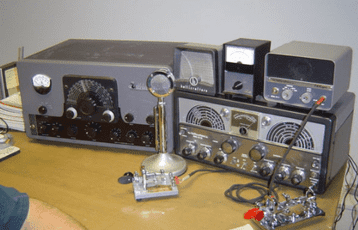
My QSO Today is with Mike Myers, VA3MPM, who is an active ham in the city of Ottawa, Canada.  Mike likes to collect old transceivers, the ones that many of us wanted as kids, in the seventies, but out of our financial reach at the time. He likes the early Drake, Swan, Yaesu, and Kenwood transceivers that he finds at hamfests for very little money.  Mike says that most of these rigs will work with a little clean up and maybe replacement of all of the electrolytic capacitors.  In the end, he has some very interesting rigs where each one gives him a different on-air user experience.  

Some new hams to the QSO Today podcast tell me that the cost of a ham rig can be expensive and a barrier to getting on the air.  These older rigs (under the careful scrutiny of an Elmer) can be a great opportunity to get on the air for a fraction of the cost of a new rig.  With a little more help, you can add some SDR (Software Defined Radio) capability to give these rigs some interesting new capability (See QST Magazine, Jan 2017, Modulation-Demodulation Software Radio, by Alex Schwarz, P. 50). 

For me these QSO Today conversations stimulate some new thinking.  I hope that they do the same for you. 

​73,  Eric 4Z1UG

0 Comments

Uncomfortable Conversaton

1/21/2017

0 Comments


​Thanks to all of you who completed my listener survey.  As I write this over 300 of you have replied and entered my drawing for the $100.00 DX Engineering Gift Certificate.   Your input is very helpful.  I will post the survey results to the QSO Today website at some point soon.  

I take your comments and suggestions very seriously.  One of your most important contributions is guest suggestions. As I have said before, I send out tens of invitations every month to create a roster of QSO Today guests.  Only about 10% of my invitations result in QSO Today interviews.  I think that this is a very good response.  Your suggestions bring to my attention ham radio operators who have amazing stories that I want to hear and share with you.  As I go through the QSO Today Listener Survey, I am adding your suggestions to my list. Thanks!

I was pleasantly surprised by the response to Episode 127 with Brooke Allen, N2BA.  Our QSO went off the traditional rails of the typical QSO Today conversation and ventured into territory that I found both interesting and compelling. It caused me to question, in my own mind, what it is about amateur radio that should be preserved.  Why is it important for the ham radio service and its licensees to still be here after the old timers are gone?  If I have to make an elevator pitch about ham radio, what could I say in its favor?

Here is my elevator pitch: 

Amateur radio provides hands-on learning experience that encompasses a vast amount of technical knowledge, practical mechanical and social skills.  Its mentors and students often trade places as they research, experiment, construct, and test new circuits, equipment, antennas and other technical contraptions. Ham radio creates a passionate life trajectory into science and technology for its younger members.  It’s the ultimate hands-on STEM classroom.

I appreciate that my QSO with Brooke was discussed on some other podcasts.  I chuckled as I heard comments from other podcasters that I may have squirmed in my chair when, as my mother used to say, the conversation became “adult”.  As a community we should have these discussions that lead us to articulating our positions as a service and hobby for the future.  

​I don’t have answers, but I like asking the questions.

73, Eric 4Z1UG
0 Comments

The Benefits of "Dangerous" Play

1/16/2017

1 Comment

 
Picture
Often during a QSO Today interview I am catapulted into the past to remember my youth, growing up with electricity and electronics, and then the discovery of amateur radio, almost by accident. My conversation with Ian Keyser, G3ROO, this week, caused me to recall, as a very young boy, playing with electric wires, plugs and live house current. I made wall plugs from shoe boxes and rescued electric motors out of equipment my Dad had in the garage. I had a pair of sound powered field phones that provided hours of fun, especially when I ran the twisted pair out my bedroom window to the house next door. I was so inspired by the Disneyland Tiki Room at age 9, that I attempted to add Tiki Room features to the bedroom I shared with my two brothers. Unfortunately, the combination of a high speed electric motor and plastic flowers wreaked havoc on the babysitter’s fine, straight hair. That might have been the reason she never came back.

Growing up in the sixties, in Southern California, we were all over town on our bikes up in every neighbor’s tree and we spent countless hours digging underground forts in the empty fields behind the house. We sometimes got hurt, although not badly, were pretty dirty until bath time and kept Band-Aid in business for years. We were not alone; all of us kids carried our childhood wounds with pride, sometimes even sporting a cast.

​What I remember is that my parents didn’t protect me from my interest in electricity, although maybe not aware of how many times I got a shock. They supported my interest and created opportunities for me to work on my electronic projects from an early age. I still have the telephone lineman’s pliers in my tool box that I received from my grandparents on my seventh birthday over fifty years ago. I can’t work on telephone lines without them. When I wanted a Heathkit electronics laboratory in the fifth grade, my Mother made a list of electronic and electrical terms on a yellow pad that I had to learn to merit the gift. Frankly, I was surprised to know that my Mom knew the definition of an Erg! (Erg=10 to the minus 7 Joules)
Taking risks, pushing the envelope, trying new things and occasionally getting injured helped us to grow into confident adults. Perhaps the combination of potential liability, insurance companies and over protective parenting has created a safe but non-challenging environment. When was the last time you saw a “high dive” or even a diving board at a public pool? 

Are we too protective of our children that we limit their opportunities, setting them into safer situations in front of the computer, television, or iPad? If we want our kids and grand-kids to be builders or even amateur radio operators, we may have to open the doors and let the kids out into the world. I don’t have the answer. I am only asking the questions. 
 
73, Eric 4Z1UG
1 Comment

Live on the edge in 2017

1/2/2017

2 Comments

 
Picture
I am now 126 episodes into the QSO Today podcast. If you are reading this when I sent it, it is New Years’ Eve, 2016. Tomorrow is 2017. I want to share with you a few things that I learned in 2016.

• Being a podcaster, especially one who hosts a guest every week, requires good listening skills. Since I began the podcast, I have learned to listen more intently for the gems that are often revealed. In 2017, I hope to become more comfortable with the “pregnant pauses” in conversations that often lead to a better QSO and not be the one who breaks the silence.

• My education trained me to add up the facts before making a decision; put all of my ducks in a row. While it goes against this way of thinking, my gut often gives me the early warning of the right decision before the facts add up. I am paying more attention to my intuition than ever before. Perhaps this is one of the gifts of being older.

• When adversity strikes, often the pain is intense. It causes an accounting of one’s health, business and personal relationships, and a resetting of priorities. When the pain subsides, the gift is the knowledge of which tasks, challenges, friends and family members are important and sadly and painfully, which are not. In the long run this is a good thing like cleaning out the basement after the flood.

• One of the guests whom I hoped to have on the QSO Today Podcast was Jim Dixon, WB6NIL, who was the creator of the Allstar technology, ROIP or radio over Internet protocol that leverages the Asterisk phone system created by Mark Spencer. I have mentioned a few times that I use this technology, created by Jim, to stay in touch with my ham friends around the world using my UHF repeater. Sadly, Jim passed away this month leaving a void in the Allstar community amongst his friends and the people who knew him. While Jim and I traded emails about coming on the show, it was not to be. He who hesitates is lost.

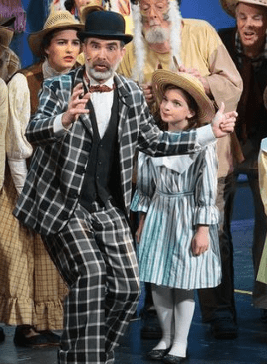
• The QSO Today Podcast, like some of my other activities, was born out of my desire after my 56th birthday to live my life out “on the edge”, to take risks to do something that others have not done, to preserve the stories of some of the amazing Hams who contributed so much to our noble hobby. I also sing and perform in musical theater, no longer the geeky kid who ran the lights and sound backstage. (the picture is 4Z1UG singing "Colonel Buffalo Bill" as Charlie in Annie Get Your Gun).   I can only say that I am sorry that I did not adopt this attitude a few decades earlier. If you are young and reading this message then I advise you to take chances on the edge of your comfort zone. Your life will be enriched.

73,  Eric 4Z1UG

2 Comments

Up, Up, and Away!

12/25/2016

1 Comment

 
Picture
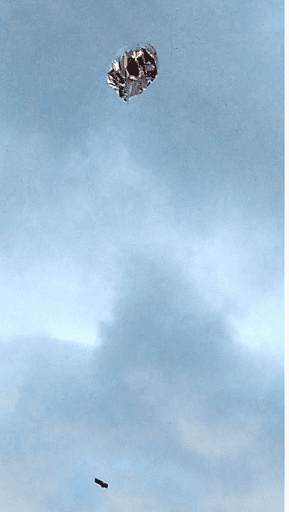
Often, it seems that in interviews with my guests, we do not cover all of the bases in the first hour.  It was only after the end of the first hour with Hans Summers, G0UPL that he mentioned the work he is doing with high altitude balloons.  Since I was still recording, I added this segment to this week’s podcast.  Hans captured my imagination and filled it with new possibilities. 

​We have had other balloonists on the QSO Today podcast including Keith Kaiser, WA0TJT, in Episode 82, who uses the large latex weather balloons which require large amounts of helium to take these balloons in the stratosphere where they break and fall back to Earth.  The cost of these launches can exceed one-thousand US dollars.  These, often one-day high altitude events, involve chasing the balloon to the place where the payload eventually lands by parachute. ​
​
​Hans shared with me another idea.  What if you could make the payload so small and so light that you could use the Mylar party balloons sold in gift stores to do a high altitude balloon launch that stays in the sky for weeks, traveling around the world?  Furthermore, rather than using a VHF radio, what if you used a HF transmitter/beacon that leverages the world wide amateur radio network of WSPRnet receivers to track the balloon location and altitude to display on a website for the balloon launch?   This is exactly what Hans is doing with VE3KCL in his balloon launches.  Hans has leveraged the WSPRnet network to track these high altitude world traveling amateur radio balloons.


Read More
1 Comment

Meeting International Friends

12/17/2016

1 Comment

 
Picture
​One of the greatest aspects of our amateur radio hobby is our ability to make friends across the world around our common interest of amateur radio and electronics. This has been pointed out in many of the QSO Today episodes by my guests, that we are a “fraternity” (includes YLs and XYLs) with a shared interest in all things radio. As we travel around the World, some of us will knock on the doors of homes and apartments where we see ham radio antennas just to meet another ham radio operator. Often these meetings result in lifelong friendships. I still stop and introduce myself on my travels around Israel when I see a ham radio antenna. These days, I do not see many. In fact I made a mental note of an inverted V that I saw on the side of the road in my travels last week. I need to stop there on my next pass. “Do you have a ham radio operator in there?” I say on the intercom. “I am Eric, 4Z1UG. Can I meet you and say hello?” Most of the time, the answer is a resounding “YES”. 
 
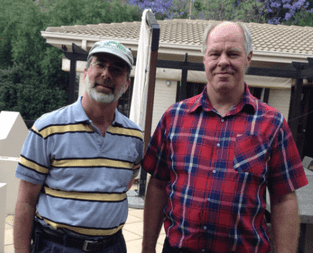
It is with this in mind that my meeting with Eddie Leighton, ZS6BNE, my guest in Episode 28 of the QSO Today Podcast, was like the meeting of two old friends last month when I was visiting South Africa with my wife, Karen. Our friends in Johannesburg, where we stayed, were only too delighted to allow me to invite Eddie to their home so we could meet in person, catch up on ham radio, and to operate Eddie’s RaDAR (rapid deployment amateur radio) rig on the outside patio. I was grateful that Eddie agreed to drive almost three-hundred kilometers to meet with me from his home QTH in Lichtenburg. It was a great afternoon and I hope that I will meet Eddie again on our ham radio travels.

​This episode departs from my normal format as the audio is the conversation and demonstration of Eddie’s “minimalist” RaDAR backpack. This tiny but simple system allowed us to make an 800 kilometer SSB QSO with another ham in South Africa using five watts and a 40 meter end-fed wire. I picked up a Zoom H5 audio recorder, thanks to your support, and used it for the first time to record this “eyeball” QSO. I hope that you enjoy it as much as we did. 

1 Comment

Our Homebrew Challenge

12/10/2016

0 Comments

 
Picture
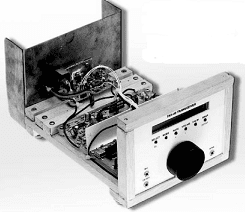
​Some of my earliest ham radio memories were of a group of hams in the Newport Amateur Radio Society who would spend their Saturdays at the electronic surplus stores of the San Fernando Valley in Southern California. In the 1970s there was a lot of military surplus electronic gear that could be purchased by the pound if you were willing to haul it away. I remember these hams stripping this gear down for its modules, relays, panel displays and switches that would cost a king’s fortune if purchased from an electronic store. These homebrew projects were not only functional but beautiful to look at in their custom cabinets and rack panels.

I remember Leroy, W6SYC, had a four channel Motorola tube station in a Motorola “J” cabinet where he controlled the channels with a touch-tone pad inside the cabinet next to a Western Electric 247B DTMF decoder chassis. This was his primary two meter base station and it was beautiful to look at and of course it sounded great on the air.

These are the memories that stirred in me during my conversation with Jim Veatch, WA2EUJ, who is my guest this week on the QSO Today Podcast. Jim is a homebrewer who uses what he has on hand, often from surplus gear, to build his projects. As a three time winner of the ARRL Homebrew Challenge, Jim’s solutions are not only clever, but the end products are beautiful in form and design. I hear some of ham radio’s leaders lament the loss of the homebrewing art. They may be right in terms of the homebrew single tube Novice rigs that everyone started with 60 years ago; however, it seems that homebrewing has morphed with the times as the World War Two surplus parts are less available. Electronic parts and kit companies are proliferating on the Internet with no shortage of low cost opportunities to obtain parts to build almost anything. These are very exciting times to be a homebrewer as you will hear on my QSO Today with Jim. 

0 Comments
<<Previous
Forward>>
    Picture
    Picture
    Subscribe to Blog

    Author

    Eric Guth, 4Z1UG / WA6IGR, is the host of the QSO Today Podcast, and an amateur radio operator since 1972.  Eric has lived and worked in Israel since 2000. 

    Archives

    August 2025
    June 2025
    May 2025
    April 2025
    January 2025
    December 2024
    November 2024
    May 2024
    April 2024
    February 2024
    January 2024
    December 2023
    November 2023
    October 2023
    December 2020
    November 2020
    October 2020
    September 2020
    August 2020
    June 2020
    May 2020
    February 2020
    January 2020
    November 2019
    November 2017
    August 2017
    February 2017
    January 2017
    December 2016
    November 2016
    October 2016
    February 2016
    August 2015
    July 2015
    February 2015
    December 2014
    October 2014
    September 2014
    August 2014

    Categories

    All
    Clubs
    Elmer
    Kids In Ham Radio
    Microwave
    Podcast Tools

    RSS Feed

Proudly powered by Weebly